Today is the Day, Birth Mother
Today is the the day, Birth Mother. On this day twelve years ago, we walked out of the courtroom with our forever. But I can’t and I won’t forget that it’s also been twelve years since you last kissed him good-bye.

Sometimes, I close my eyes and imagine us back in the room where we used to visit. That stale room didn’t speak of the love flowing from it. Colorless walls didn’t paint the scene of two strangers brought together on behalf of a new, precious soul. We spent so much time in that room. Holding him, soothing him and swapping stories of life.

And then, we had to say goodbye to the room where our story took flight. One final goodbye. We embraced and exchanged well-wishes. But they didn’t serve justice to the journey we just traveled. Our road coming to an end. You held him and kissed him. Oh, the bittersweet taste of that final kiss.

Beautiful and broken all at the same time.

I don’t know what it would be like to exist in your shoes; to carry the ghost of a child you barely knew. I don’t want to imagine it but I can’t help myself. The truth is that a piece of my heart walked away with you on that day and it has never returned.

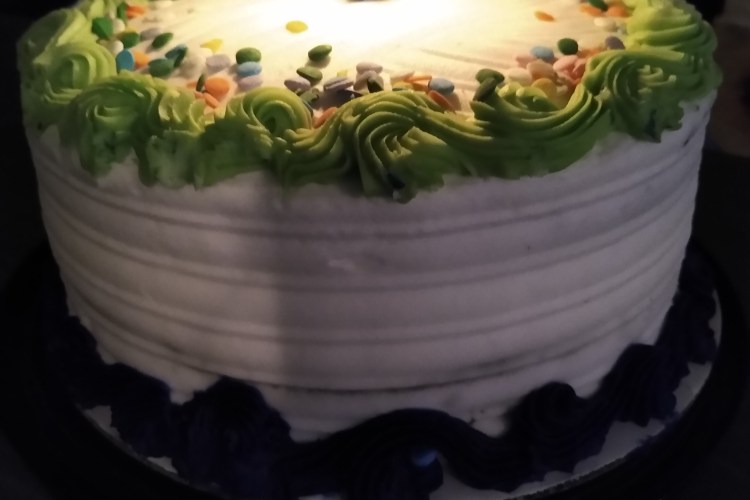
Today is the day, Birth Mother. As we ate cake and celebrated adoption, you were on my mind. You’ve never left. How could you? I don’t want you to. I don’t ever want to forget you. Because of him. Because some stories should never be erased.

The closer he gets to being an adult, the more I feel the pain; that urging to slow things down, revisit earlier years, and hang on even tighter. Even that feels selfish. For you, he’s still that clumsy little babe who cooed and giggled at the sound of our voices. Moments captured in time. Ones that never aged.

Beautiful and broken all at the same time.

Today is the day, Birth Mother. Years ago, the gavel fell and that chapter closed. But a continuation of our story emerged; one of challenges and cheer, of laughter and fear. You haven’t been here for it, of course, but in many ways your presence is still felt.

In my mind’s shadows of that old visit room.

In his laugh.

And his heart.

In his crooked smile.

And all the other things that make him delightfully who he is; who we are.

Beautiful and broken all at the same time.

The Summer of ’76

It was the summer of ’76 when my dad drove our family to California for a vacation. I was four-years-old in the backseat of a sweaty, hot car as we made our way to the Golden State – approximately 1,900 miles from my hometown. When we arrived, we checked in at the hotel and then headed straight to the beach. Warm sand hitting my toes. Sun setting across the distant ocean. Taking in the glory in front of us.

I cautiously approached the water with my green flip-flops on. Dipped my toes in and then took a few steps. The tide came up, pulled my flip-flops right off of my feet and swept them out to sea. Dad exclaimed, “Jaws got them!” as he tried to cheer up his sad little girl. (The original movie just came out the summer before our trip. Plus, about a mile from our beach, someone caught the largest Great White in California history, at that time.)

The rest of the beach vacation consisted of me digging holes in the sand, running close enough to the water to fill a small bucket, and pouring it in the sand; my attempt at building my own little ocean so that I didn’t have to go where Jaws lived.

Ocean animals have terrified me ever since. I love looking at the ocean, but you won’t ever catch me swimming in open water. I won’t book cruises and can barely watch movies that contain deep water/giant creatures that could eat me for lunch.

My four-year-old brain heard my Dad say, “Jaws got them!” My brain signaled that the ocean and sharks are something to avoid. Digging a hole to create my own little ocean was a way for me to build a safe place where I knew I could survive without the giant monsters looming in the water.

This is similar to what we see with children who have experienced trauma. (For the record, I’m absolutely not saying that my experience at the ocean is as serious as traumatic events of abuse.) This experience instantaneously changed my view of the ocean and it has stayed that way ever since the summer of ’76. The holes I dug really didn’t create more safety for me even though my brain convinced me otherwise.

Just as happy experiences alter development of the brain (in a positive way), trauma does so as well. But not in a good way. Instead, the brain develops patterns for survival. For some kids, it may look like hoarding food even though there is plenty to eat. For others, it could be locking every door they enter just in case someone tries to come in.

Some kids run away from their caregivers (even ones who are safe) and keep running to avoid any type of attachment or relationship. Kids may lie to avoid a beating, although they are no longer in an environment where beating occurs. For others, it looks like claiming control of everybody and everything they can (even animals) because they could not control what happened to them in the past.

Changing the landscape to which kids from hard places view life includes us changing our perceptions of trauma. The brain controls our action – even when we don’t understand it. From fear to elation, everything that happens all comes to down to brain chemistry, connectivity and development.

When I revealed that his words forever altered my view of the ocean and aquatic life, my dad was quite surprised. He had no idea that experience in the summer of ’76 had an impact on me. Families who care for traumatized children mustn’t be surprised when the child pulls away from nurturing or hides food in their sock drawer. Or, runs away from the home. They need to know that it isn’t the child’s response to them but to trauma.

As we end National Child Abuse Prevention Month and move into Foster Care Awareness Month in the US, let’s strive to truly and deeply understand trauma and the subsequent life-long impact it has on the developing brain.

Your Worth is not Defined By Your Ability to get Pregnant

Your worth is not defined by your ability to get pregnant.

Read that again.

One of the many troubles this virus has caused is in the area of “non-essential” medical appointments. Infertility treatments and appointments fall into that category.

But for so many couples, these appointments feel essential. Crucial to their plans. Important to their dreams. Vital in their next step in building their family.

Imagine grieving and struggling with the loss that infertility brings, taking the courageous step to make a doctor appointment, and then getting the call that it has all been postponed. In an instant, fear and sadness creep in. All of that pent-up hope spills out.

But, friend, your worth is not defined by your ability to get pregnant.

I had to learn this over the years; to discover my worth is not caught up in that one aspect of womanhood. It wasn’t easy, of course. Usually, these things aren’t.

On this Easter weekend, please remember this.

You are more valuable than any riches on Earth.

God hasn’t forsaken you.

When Jesus headed up that hill to the Cross, he had you on his mind.

Your worth is not defined by your ability to get pregnant.

Remember this.

April Showers Bring May Flowers

April showers bring May flowers. Seems like a perfect time to focus on this thought. I wanted, better yet, needed to change the tone of our home life since being in a shelter-in-place status. The moods of our children and my husband and I have not been the best. (Embarrassed to admit that.)

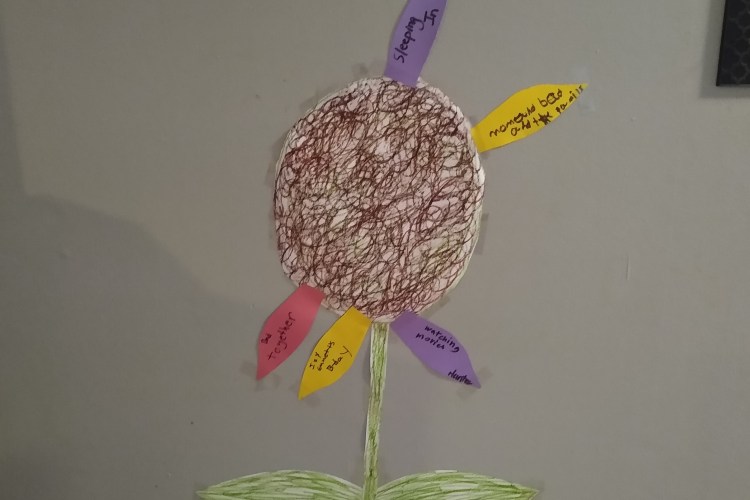
Last night, after taping a paper petal-less flower that I created to the wall, I called the kids together and had them sit down in front of it.

“You know this is a difficult time for everyone and I haven’t been in the best of moods, lately. But God reminded me today that there we can always find things to be thankful for even in hard times. You may not know this, but you are living in a major historical event.”

“Really?!”

“When I worked in a nursing home, I got to talk to an elderly man who was a child during the 1918 Spanish flu. What we’re going through right now is like it because this virus is happening right now around the world. Do you know what the man remembered about it? How his mom and dad kept him and his siblings safe and alive because they had to stay indoors all of the time.” (I didn’t tell them about how his mom used whiskey as medicine. They don’t need that idea.)

I went on to tell them that even though this older man remembered how bad the flu was, he also remembered the good things that happened while being kept safe in his house.

“I know it’s hard to be in the home all of the time, but we can always find things to be thankful for. April showers bring May flowers and what we’re going through right now is similar to a storm. But, guess what? There are things each day that we can be happy about and hopefully, in May, there will be lots of flowers.”

I then pointed to the giant flower on the wall. “I made a lot of petals out of paper. Each day when you wake up or throughout the day if you think of something you are thankful for, write it down, put your name on it and give it to me to tape up. When this is over, we can look at our flower in full bloom!”

Each kid grabbed a petal and wrote something they’re thankful for today. My husband and I did as well.

April showers bring May flowers. My hope is my kids will learn that even when things seem uncertain, we can always find a reason to be thankful.

“I will give thanks to you, Lord, with all my heart; I will tell of all your wonderful deeds.” – Psalm 9:1

Faith over Fear but Not Being Foolish

“I’m scared I’m going to get the virus.” His chocolate eyes looked up at me as he mumbled these words. “Don’t be scared” I said to assure him. “Remember when I told you guys that we need to have faith over fear but not be foolish?” This is why we are staying in the house as much as we can. “Okay…”, he said before relaxing into his bed.

Faith over fear but not being foolish. I’ve done my best to teach my kids this thought while also clinging to it as well. It’s hard, isn’t it? Not hard to be faithful. At times, not hard to be foolish (although we can do a really good job at being quite foolish). The fearful thing – yeah, that one. It’s a challenge to not fear.

Even as believers, our minds wander into the world of “what if”. I know I’ve found myself wondering what life would look like if I got this virus or if anyone I treasure does. These meanderings of my mind do not help. They don’t keep us safe or prevent us from getting exposed to it. Instead, they remind me of just how human we really are; how vulnerable we are.

Friends, this is what I have experienced in my life and believe: we may be strong and healthy one day, then completely broken down the very next day. Our physical bodies – flesh and bone – are Earthly. Our soul is not. And maybe that is one of the main consolations we can hang onto at this time.

Instead of focusing on what is going wrong or our fears, perhaps, focusing on what is going right would do our souls well. In my city, a Facebook group dedicated to helping each other through this has revealed so much. I’ve lost count on the number of times people have offered to shop for someone else or give advice on how to remedy a situation. I’ve woken up to messages checking on my family and have exchanged lots of “I love you’s” this week.

Faith over fear but not being foolish. In some respects, watching the chaos and ashes unfold around us reminds me that the Lord can make beautiful things out of dust and ashes.

Love is greater than fear. What a gift that is to witness.

Momma-in-Waiting (Part 6)

Momma-in-Waiting, I remember you.

It’s been years but you’ve never left my mind. Standing behind a brochure-covered table at a conference, you made your way over to me. I recognized that sheepish grin. One filled with grief and forced onto your face. Your hands grazed over the brochures about adoption; nervously picking one up.

Before you knew it, your friends showed up. Excitement and eagerness written all over their faces. “Here, take this one!” they exclaimed while pushing the brochures onto you. “You should call them!” You stood there, frozen, politely telling your friends that you will think about it.

I wanted to grab you and run away. Take you far from the pain and the pressure. I couldn’t though. Instead, I was a witness to the turmoil you surely felt. As your friends moved on, you paused for a moment and looked up at me. I said, “Call me sometime if you have any questions or need to talk.”

Momma-in-Waiting, your well-meaning friends have no clue what you’re going through.

They try but will never be able to fully meet you where you’re at. That place is reserved for those moments of anguish. You know this far too well.

Momma-in-Waiting, I don’t know if you ever called me.

I talk to so many people throughout the day. Ones just like you. Calling out of curiosity, wanting to learn about adoption, but fearing the answer might not be what they need to hear.

It is hard navigating this strange new land, isn’t it? You dreamed of being a mommy. Married the love of your life and soon, baby-talk became a part of your conversations.

And, then. Nothing. Silence. Negative test after negative test.

You became fraught with worry. That worry turned into frustration. Frustration turned into despair. A few friends know and reach out to you, but don’t know what to say so they overcompensate with philosophical statements and impulsive reactions.

Others become silent. Their silence is nothing compared to the stillness you come to home every day. Your home isn’t filled with the giggles of children. The spare bedroom you once dreamed of becoming a nursery sits empty. Sometimes, you go in there and visit for a while. Laying on the floor and looking up at the ceiling, you imagine the joy that could fill that room. That room is one of emptiness but also of hope.

Hope creates courage. Courage generates resolve. Resolve produces tenacity. Tenacity gives rise to overcoming. And, sweet sister, you can overcome.

Momma-in-Waiting, hold on to that hope.

Let it be a guiding light.

It will carry you far.

Life Lesson: Having Faith

Here’s another Tuesday Night Teaching that I did with my kids. This one is called, Life Lesson: Having Faith.

“Having faith in God means that even though we cannot ‘see’ him, we know he is there. Faith is believing in what we don’t see. Can you actually see love?” My kids nodded that “no”, we don’t really see love.

“What about smells? Can we ‘see’ them?”

Giggles…”Well, maybe sometimes….”

“Okay, but you get the point.”

I looked at my daughter and reminded her of the times she thought God wasn’t listening to her prayers because she didn’t see the answer. I then spoke to my kids about feeling distant sometimes from God, especially when times are hard.

“There are moments when we are going through rough times and we really don’t feel or see that God is near us.”

I took three sheets of wax paper and held them up so that they blocked a cross hanging on our hall.

“Remember, the cross represents God. Can you see the cross now?”

“Not really”, they said.

“Okay, there are other times when things aren’t quite as bad but you still wonder where God is.”

I removed one sheet of the wax paper.

“You can barely see God, right?”

“Yes.”

“Let’s say things are maybe a little bit better but still a little cloudy and you’re not sure if God is near you.”

Removed another sheet of wax paper.

“The cross is becoming even more clear now, right? Okay. Now life is great and we’re moving along…”

Removed the final piece of wax paper to reveal the cross.

“Do you see that the cross was there the entire time, even when you couldn’t see it or when it was a little hard?

This is what it means to have faith in what is unseen. No matter how bad things get in our lives, even when we cannot see him clearly, he is there.”

I then read Hebrews: 11:1:

“Now faith is confidence in what we hope for and assurance about what we do not see.”

Explaining faith to children can be hard, especially for extremely literal kids! I’m hoping that this visual lesson helped them to truly believe in what is unseen; to have faith in God during times in their lives when the view is cloudy and when it is clear.

Life Lesson: Having Faith – this one is for us adults, as well.

A Caseworker’s View of Removals

Author’s note: This is a guest post from a child welfare professional. It is necessary to seek out the perspectives of everyone involved in the foster care system, and to learn a caseworker’s view of removals.

Removals. There are many definitions of the word. Sometimes, removals can be good things; such as the removal of a brain tumor, or a pesky rodent in your crawl space, or the removal of an unwanted weed in your garden. Other removals can be tragic; such as the removal of a parent from the home due to death, or the removal of a pet from a home due to neglect, or of a teenager’s cellphone due to poor grades (tragic to the cellphone-dependent teen).

But what about the removal of children from their homes? Some may say tragic. Others may say good. I would like to share a story about the removal of children from their home, and let you decide. 

I worked a case recently where our office was sent orders to remove youth from an unsafe situation. Upon arriving to the home to carry out the removal of these youth, it was sudden, pure, chaos. Myself and my co-worker arrived at the home with law enforcement where the kids were inside the home, supposedly planning their escape.

Lots of pleading and knocking on the door. Kids were in shock, screaming, crying and shaking uncontrollably. Eventually, we were able to get the kids placed. It was 2:00 am when placement was made. I got back to the office at 3:30 am. All together, the removal and placement of the kids took six hours – basically, an entire night.

The following day was a holiday, so our office was closed. I tossed and turned as I tried to sleep. I kept thinking about how traumatic the experience had been for those youth, and for myself and the other worker. During our 6 hours with them, we were called “monsters”, we “stripped them of any self-respect and dignity” they had, that we take kids for a paycheck, we didn’t care about them, we made their lives a living hell, and that we were useless workers.

Six hours of belittling and degrading. Six hours of holding back tears. Six hours of feeling so sorry for what they were experiencing, that we couldn’t feel sorry for ourselves. We were hungry, tired, and trying to make trauma-informed decisions for youth who could’ve cared less what we felt. 

I laid in bed awake the next day worried sick. From adrenaline rush to total exhaustion, I wondered if they were okay. I thought about them being dropped off with strangers, going to a new school, and how they were visibly shaking walking into their foster home.

I couldn’t sleep. I laid awake for hours thinking about how I could’ve better handled the removal. If I had said enough encouraging words…if I fed them enough…what my next encounter with them would look like. If I felt all of this…. what were they feeling? This is a caseworker’s view of removals.

I drove to work the following day; into the parking lot so slow you would’ve thought it was ice covered. I hesitated to turn my car off. I sat there in the parking lot and cried. I didn’t want to go in. I didn’t want to be a “monster” as those youth had put it. I didn’t want to participate anymore. It was very clear that I had secondary trauma from that removal. Some would give us accolades for removing those youth from a neglectful and abusing home life, but I have some questions to pose. 

What could we as a society do to prevent removals from happening? What could we do to provide proactive services to at-risk families? What could we do to provide supports to youth in crisis? What could we as a society do to assist workers who do have to work with childhood trauma, thus often incurring secondary trauma?

What extensive damage may we unintentionally cause that could possibly be worse than remaining in the natural home with supports? Did we really provide all preventative efforts?

Please pray for these youth, and any other youth who are at-risk. Please pray for workers who have to work with these families on the daily basis who see and hear more than one could typically stomach. Please pray that doctor, juvenile officers and law enforcement officers can see the whole picture and the lasting impact that may come from signing those papers.

A caseworker’s view of removals is often heartbreaking, and I ask that you please pray for guidance on how you might help this broken system. 

Podcast Interview and Thankfulness

Hey friends – Just a little note about a recent podcast interview and thankfulness.

It was 1983 when the words infertility/not being able to ever give birth first became a part of my vocabulary. People just didn’t talk about it, then. Not.At.All. To think of women (and men) throughout centuries who suffered in silence makes me ever-so-thankful for where we are now when it comes to this topic. We still have a long way to go for it to be understood, but we have made significant progress.

Recently, I had so much fun on a podcast called: Foster Care – An Unparalleled Journey. You can listen to my interview by clicking here.

As an adolescent, I knew that I had a lot to say about it but also wanted to keep it hidden out of shame. I thought, “maybe one day, I will write a book”, but it was a burden to carry, becoming heavier as each year passed. When given the opportunity to tell it now or write about it, I still feel a measure of the pain unpeel itself from me – even after all of these years.

Reminded of what the Lord can do with hardship. The Enemy can’t stand for us to be free of the things that were meant to bring us suffering. He would rather us live in misery, sticking to the labels we often give ourselves.

Keep speaking of those things. Keep walking in faith. Keep believing. YOUR story matters.

I also just want to say a big, “THANK YOU” for those of you who have reached out or have read my posts. Your kindness truly means so much.

The 11-yr-old girl I used to be would not believe how far we’ve come; how far she has come. She would be thrilled and dance with joy.

She would also be so encouraged and thankful for you.

a hope for the future

Have you ever met a kiddo without a hope for the future? I have. After having been in foster care for several years, a 12-yr-old boy was assigned to my caseload. One day, I asked him, “What do you want to be when you grow up?” He looked me straight in the eyes, shrugged his shoulders and said, “Eh…I figure I’ll either be in jail or dead by the age of twenty-one, so does it really matter?”

Speechless. It took me a moment to gather my thoughts.

“Don’t put that out there! There are all kinds of things to be and do when you grow up!” (I said this to encourage him but to no avail.) Shrugging his shoulders again, he said, “Well, it’s probably true.” Conversation ended.

Years later, I found out that after he aged out of foster care (because he was never able to be matched with a family), he ended up committing a non-violent crime and was sentenced to prison…right around the age of twenty-one. I have no idea if he is out or not, but even after all of these years, I wonder if he ever found his place, or better yet, found himself, in this world.

Trauma defined his life and identity. It filled in the lines between his growing years. It slapped a label on him that was nearly impossible to peel off. Had he been able to connect with one consistent adult (other than child welfare professionals), would his life have turned out different?

YES. I ABSOLUTELY BELIEVE SO.

How can we, as a society, help kids like him?

We need:

  • Families interested in fostering kids over the age of twelve, including sibling groups with mixed ages.
  • More funding for programs designed to target at-risk youth and provide them life skills, opportunities to explore jobs and support.
  • Trauma-informed base of knowledge into any program, school or other sites who provide care, in any capacity, to youth.
  • Churches to educate themselves and get engaged with systems that might make them uncomfortable. (Jesus doesn’t ask us to be comfortable, anyway. Can I get an ‘Amen’?!)
  • Purpose-driven resourcing for at-risk youth. Meaning, behind every action that is taken with this population, make sure there is a purpose that will drive them towards a better future.
  • Mentors!! We absolutely need adults to step up and seek out ways to get involved. I’m not going to lie. It isn’t pretty all of the time and you may not think you are making a difference, but every small action can lead to big leaps for these kids.

If there isn’t a mentoring program in your community, find out how you can start one. Talk with various agencies who work with at-risk kids and ones in foster care. Consider if your small group at church could provide support. Speak to your schools about what they might need. I am a firm believer that when at-risk youth (in or out of foster care) find connection with at least one adult, their chances of success greatly improve.

Kids deserve to have a hope for the future. We can help get them there. I believe that!